People ask what types of drugs there are for different reasons: sometimes a family is worried, sometimes a workplace needs to screen. Substances are grouped by their source and by the effect they have on the body, and a urine test looks for a separate target for each substance. This article covers the main types of drugs, the test that detects each one and what to consider when choosing a test, with sources.
Short Answer
Drugs are usually grouped by their effects into four main classes: stimulants, depressants, hallucinogens and cannabinoids.[1][2] On top of these come new psychoactive substances, whose number grows every year.[3] Urine tests look for the substance itself or for the metabolite the body turns it into. Each substance is screened either with its own test or with a multi-panel test that screens for several substances at once.[4]
What Is a Drug?
The World Health Organization defines psychoactive substances as substances that, when taken, affect mental processes such as perception, consciousness, thinking, mood and emotions.[5] In everyday language, the word drug usually means psychoactive substances that are made and sold illegally, along with some medicines used for non-medical purposes. Cannabis is one of these substances, so it is not something separate from drugs. It is also the most widely used drug in the world.[6]
How Are Drugs Classified?
There is more than one way to group drugs. The two approaches used most often in health care classify a substance by the effect it has on the body and by the source it comes from.
Types of Drugs by Effect
- Stimulants: They stimulate the central nervous system, speed up the heartbeat and raise blood pressure. Cocaine, amphetamine and methamphetamine belong to this group.[7][8]
- Depressants: They slow down brain activity. Sedative medicines used to treat anxiety and sleep disorders, such as benzodiazepines and barbiturates, belong to this group.[9][1] In this article we also place in this group opioids such as heroin, morphine and fentanyl, which at high doses can slow breathing and the heartbeat.[10]
- Hallucinogens: They temporarily change thinking, mood and the perception of reality. LSD and psilocybin are well-known examples. Ketamine and PCP are treated separately as dissociative substances, which make a person feel cut off from their body and surroundings.[2]
- Cannabinoids: This group includes cannabis and synthetic cannabinoids made in laboratories. The main mind-altering substance in cannabis is THC.[11]
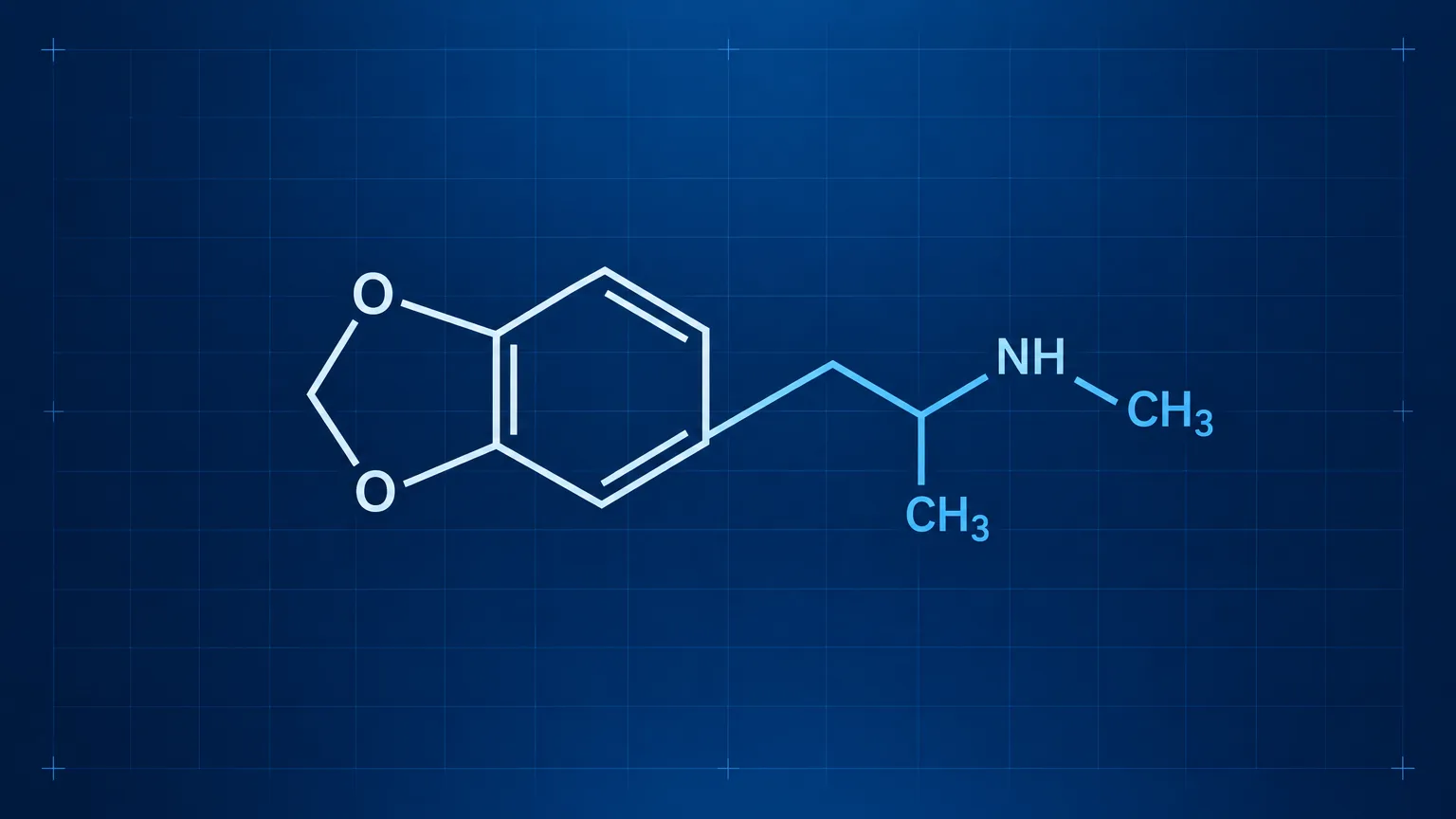
Some substances do not fit neatly into one group. Ecstasy (MDMA) has effects similar to stimulants such as methamphetamine, but it can also slightly change vision and the sense of time, so some researchers also count it among the hallucinogens.[12]
Types of Drugs by Source
- Natural substances: These come directly from plants. Examples are cannabis, made from the cannabis plant, and opium, morphine and codeine, obtained from the opium poppy.[11][10]
- Semi-synthetic substances: These are made by chemically processing a natural substance. Heroin, which is made from morphine, belongs to this group.[13]
- Synthetic substances: These are made entirely in a laboratory. Methamphetamine, MDMA and synthetic cannabinoids are examples.[8][12][14]
The Main Types of Drugs and the Tests That Detect Them
Rapid urine tests use antibodies to recognize the substance in the urine, or the metabolite the body makes from it. That is why the name of a test and the substance it looks for in urine are not always the same.[4] The table below lists the main substances and the target that screening tests look for.
| Substance | Test | Target in urine | Group |
|---|---|---|---|
| Cannabis | THC | THC-COOH (a metabolite of THC) | Cannabinoid |
| Synthetic cannabinoids | K2, UR-144, AB-PINACA | Compound-specific metabolites | Cannabinoid |
| Cocaine | COC | Benzoylecgonine | Stimulant |
| Amphetamine | AMP | Amphetamine | Stimulant |
| Methamphetamine | MET | Methamphetamine | Stimulant |
| Ecstasy | MDMA | MDMA | Stimulant |
| Heroin, morphine | MOP, OPI, 6-MAM | Morphine, and 6-MAM, which forms only from heroin | Depressant (opioid) |
| Fentanyl | FEN | Fentanyl or norfentanyl, depending on the test | Depressant (opioid) |
| Methadone | MTD, EDDP | Methadone and its metabolite EDDP | Depressant (opioid) |
| Benzodiazepines | BZO | Benzodiazepine metabolites | Depressant |
| LSD | LSD | LSD | Hallucinogen |
| Psilocybin | PSI | Psilocin | Hallucinogen |
| Ketamine | KET | Ketamine | Hallucinogen (dissociative) |
| PCP | PCP | PCP (phencyclidine) | Hallucinogen (dissociative) |
| Pregabalin | Pregabalin | Pregabalin | Prescription medicine |
The target substances in the table are based on published clinical reviews of urine screening tests and on our product information.[4][15] For LSD, psilocybin and ketamine tests, the target substance can vary by manufacturer.
What Is Cannabis and What Are Its Effects?
Cannabis comes from the cannabis plant and is also commonly called weed. Products made by spraying synthetic chemicals onto plant material are not cannabis. They contain synthetic cannabinoids and are screened in urine with a different test.[14] The body breaks THC down into a metabolite called THC-COOH, and urine tests look for this metabolite.[4]
Cannabis causes a short-lived high. During this time, a changed sense of time, impaired thinking and memory, a faster heartbeat, and increases in blood pressure and appetite can occur. Some people may experience anxiety, fear, distrust and panic. Frequent, heavy use has been linked to problems with cognitive functions such as learning, memory and attention. Reports indicate that regular, heavy use during adolescence can have long-lasting negative effects on the developing brain. Using cannabis every day or almost every day is associated with a form of addiction called cannabis use disorder.[11] We cover how long cannabis can be detected in urine in detail in our article How long does cannabis stay in urine?.
Synthetic Cannabinoids (Bonzai, K2) and Their Risks
Synthetic cannabinoids are chemicals made in a laboratory and usually sold sprayed onto plant mixtures. Like cannabis, these mixtures are mostly rolled and smoked.[14] In Türkiye, these substances are known to the public as bonzai.[16] Some synthetic cannabinoids are very potent, and very little is still known about their effects on the body.[14] Their chemical structure differs from THC, so standard THC tests cannot detect them. Compound-specific tests are used to screen for these substances.[4]
Effects and Detection of Cocaine
Cocaine is an addictive stimulant made from the leaves of the coca plant. Its short-term effects include narrowed blood vessels, enlarged pupils, higher body temperature and blood pressure, and a faster heartbeat. As the dose or frequency of use goes up, restlessness, panic attacks, extreme suspicion (paranoia) and psychosis, in which a person loses touch with reality, can appear. Heart rhythm disorders, heart attack, stroke and seizures are among the most serious complications and can lead to sudden death.[7] Cocaine breaks down quickly in the body, and urine tests look for its main metabolite, benzoylecgonine.[4]
Effects of Amphetamine and Methamphetamine
Methamphetamine is a highly addictive stimulant made in laboratories.[8] International sources also call its pure crystal form "ice".[17] In Türkiye, methamphetamine is generally known as "met", "kristal" and "buz" (ice).[18] It strongly stimulates the nervous system. Short-term risks include extreme suspicion, anxiety, a faster and irregular heartbeat, raised blood pressure and stroke. Long-term use can lead to insomnia, memory loss, addiction and symptoms of psychosis.[8] Most tablets seized under the name Captagon contain other stimulants, amphetamine above all, instead of fenetylline, the active ingredient of the original medicine.[19] Urine screening uses separate tests for amphetamine (AMP) and methamphetamine (MET). If both substances need to be screened, choose a panel that includes both.[15]
Ecstasy (MDMA) and Its Harms
Ecstasy is the common name for MDMA, which is made in laboratories, and it is mostly sold as colored tablets stamped with a logo. It temporarily changes the user's perception and mood. Raised blood pressure, involuntary jaw clenching, nausea and vomiting can occur. A dangerous rise in body temperature is one of its most serious risks. Sleep problems, loss of appetite, depression, anxiety, and problems with memory and attention have been reported in regular users.[12] Urine screening uses a test for MDMA.[4]
Heroin, Morphine and Other Opioids
Opioids are substances obtained from the opium poppy and synthetic substances with similar effects. Heroin is made by chemically processing morphine.[20] The most serious risk of opioids is that, at high doses, breathing slows to a life-threatening degree.[10] In the body, heroin quickly turns into 6-MAM and then into morphine.[13] For this reason, the morphine test (MOP) can also be positive after heroin use. Because 6-MAM forms only from heroin, it helps tell heroin use apart from the use of medicines that contain morphine or codeine.[4]
Fentanyl
Fentanyl is a synthetic opioid at least 80 times more potent than morphine.[21] Standard opiate tests do not detect fentanyl. Screening for fentanyl uses tests developed specifically for this substance.[4]
Benzodiazepines and Prescription Medicines
Benzodiazepines are depressant medicines used to treat a range of conditions, mainly anxiety, panic disorder, seizures, insomnia and muscle spasms.[1] Some prescription medicines, such as pregabalin, can also be misused for non-medical purposes.[22] Prescription medicines can affect the test result, so it is important to declare the medicines you take before the test. Pregabalin is not part of standard panels, so a separate test is used for it.[15] For details, see our article Does Lyrica (Pregabalin) Show Up in Urine, and How Long Does It Stay?
Hallucinogens: LSD, Psilocybin and Ketamine
LSD is a semi-synthetic substance and one of the most potent hallucinogens known.[23] Psilocybin occurs naturally in some species of mushroom and is converted into psilocin in the body.[24] Ketamine is a dissociative substance used for anesthesia in humans and animals.[25] These substances are usually not part of standard panels, and there are separate screening tests for each of them.[15]
Why Are New Psychoactive Substances Hard to Detect?
New psychoactive substances are substances that are not controlled under the international drug conventions but can pose a threat to public health. They are often made to mimic the effects of controlled drugs and prescription medicines.[26] By the end of 2025, the number of new psychoactive substances monitored by the European Union Drugs Agency (EUDA) had reached 1,050. Of these, 50 were reported in Europe for the first time in 2025. New substances keep being produced to get around legal controls.[3] Because their chemical structures keep changing, these substances often do not show up in standard tests. Standard urine screens, for example, do not detect synthetic cannabinoids.[27] Separate tests, such as the 3-Panel Synthetic, are used for these substances.[15]
The Substances Most Often Found in Türkiye
According to the Türkiye Drug Report 2026, cannabis is the most trafficked and most used illegal drug in Türkiye, as it is worldwide. Among amphetamine-type stimulants, methamphetamine is seized in the largest quantities.[19] The report points to rising trends in the indicators for synthetic pharmaceuticals (medicines used for non-medical purposes), synthetic cannabinoids and cocaine. The quantity of synthetic pharmaceuticals seized rose from about 2 million units in 2019 to more than 123 million units in 2025, and the seizures centered on products that contain pregabalin (such as Lyrica). Synthetic cannabinoids also stand out as one of the most important risk areas among new psychoactive substances in Türkiye.[19]
Which Test for Which Situation?
The right test depends on which substance you want to screen for:
- Single-substance test: Suitable when a specific substance is suspected, or when a single substance is being monitored during treatment.
- Classic 6-Panel: Screens a single sample for amphetamine, methamphetamine, cocaine, cannabis (THC), morphine and methadone.[15]
- Classic 12-Panel: Screens for these six substances plus barbiturates, benzodiazepines, buprenorphine, ecstasy (MDMA), PCP and tricyclic antidepressants.[15]
- 3-Panel Synthetic: Screens for the synthetic cannabinoids AB-PINACA, UR-144 and K2.[15]
The strength of a rapid test is that it shows within minutes which samples need to go to a laboratory. A positive result is preliminary and should be confirmed by a test such as GC-MS or LC-MS/MS.[4] We explain how to read the lines on the test cassette in our article What Does a Positive Drug Test Mean? If you want to know how long substances can be detected in urine, see the table in our article Which Substances Show Up in Urine Tests, and for How Long?
Where to Get Support
If you want support with substance use for yourself or someone close to you, you can contact these services in Türkiye:
- ALO 191: The Ministry of Health's Drug Control Counseling and Support Line is free to call from landlines, 24 hours a day, 7 days a week, and refers people to suitable centers for treatment.[28][29]
- YEDAM 115: The helpline of the Yeşilay Counseling Center is staffed by psychologists trained in addiction. People with an addiction and their relatives receive free psychological and social support.[30][31]
- AMATEM: Alcohol and Substance Treatment Centers are specialist health units that provide diagnosis, treatment and rehabilitation for people with alcohol and substance use disorders.[32] Appointments can be made through ALO 191 or ALO 182, and you can also apply in person.[33]
Conclusion
Drugs are grouped by their effects into stimulants, depressants, hallucinogens and cannabinoids, and each group has a different target in a urine test. The targets differ, such as THC-COOH for cannabis, benzoylecgonine for cocaine and 6-MAM for heroin, so an accurate result starts with choosing the test that matches the substance you want to screen for. Substances such as synthetic cannabinoids and fentanyl fall outside standard panels, so special tests should be used for them.
This content is for informational purposes only. Authorized laboratory analysis should be the basis for any clinical decision-making process.
Frequently Asked Questions
How many types of drugs are there?
There is no single exact number. Substances are usually grouped by their effects into four main classes: stimulants, depressants, hallucinogens and cannabinoids. New psychoactive substances are added to these every year, so the total keeps changing.[1][3]
What is the most commonly used drug?
The most commonly used drug is cannabis.[6]
Are drugs and cannabis the same thing?
Cannabis is one type of drug. Besides cannabis, the term drug covers many other substances, such as cocaine, heroin, amphetamine and synthetic substances.
Are weed and bonzai the same thing?
Weed and bonzai are different substances. What people call weed is cannabis, which is screened in urine with a THC test. The products known as bonzai are synthetic cannabinoids sprayed onto plant mixtures. They do not show up on a THC test and are screened with separate tests.[14][4]
What are some examples of synthetic drugs?
Examples of substances made entirely in a laboratory include methamphetamine, ecstasy (MDMA), fentanyl and the synthetic cannabinoids known as bonzai.[8][12][21][14]
Which substances does a drug test look for?
That depends on the test. Multi-panel tests usually screen for common substances such as cannabis, cocaine, amphetamine, methamphetamine, morphine and methadone. Substances such as synthetic cannabinoids, fentanyl and pregabalin usually need separate tests.[15]
Which drugs come in pill form?
One of the substances most often found as tablets is ecstasy (MDMA), which is mostly sold as colored tablets.[12] Tablets sold under the name Captagon are also of this kind and mostly contain amphetamine. More than 20 million Captagon tablets were seized in Türkiye in 2025.[19] Prescription medicines such as benzodiazepines and pregabalin can also be used for non-medical purposes.[22]
Sources
- National Institute on Drug Abuse (NIDA). Commonly Used Drugs Charts. nida.nih.gov (accessed October 16, 2026).
- National Institute on Drug Abuse (NIDA). Psychedelic and Dissociative Drugs. nida.nih.gov (accessed October 16, 2026).
- European Union Drugs Agency (EUDA). European Drug Report 2026: New psychoactive substances. euda.europa.eu (accessed October 16, 2026).
- Moeller KE, Kissack JC, Atayee RS, Lee KC. Clinical interpretation of urine drug tests: what clinicians need to know about urine drug screens. Mayo Clin Proc. 2017;92(5):774-796. doi.org
- World Health Organization (WHO). Drugs (psychoactive). who.int (accessed October 16, 2026).
- Yeşilay. Madde Bağımlılığı [Substance addiction], in Turkish. yesilay.org.tr (accessed October 16, 2026).
- National Institute on Drug Abuse (NIDA). Cocaine. nida.nih.gov (accessed October 16, 2026).
- National Institute on Drug Abuse (NIDA). Methamphetamine. nida.nih.gov (accessed October 16, 2026).
- National Institute on Drug Abuse (NIDA). Misuse of Prescription Drugs: Overview. nida.nih.gov (accessed October 16, 2026).
- National Institute on Drug Abuse (NIDA). Opioids. nida.nih.gov (accessed October 16, 2026).
- National Institute on Drug Abuse (NIDA). Cannabis (Marijuana). nida.nih.gov (accessed October 16, 2026).
- National Institute on Drug Abuse (NIDA). MDMA (Ecstasy/Molly). nida.nih.gov (accessed October 16, 2026).
- European Union Drugs Agency (EUDA). Heroin drug profile. euda.europa.eu (accessed October 16, 2026).
- European Union Drugs Agency (EUDA). Synthetic cannabinoids drug profile. euda.europa.eu (accessed October 16, 2026).
- CROM TEST product pages: Classic 6-Panel, Classic 12-Panel, 3-Panel Synthetic and single-substance tests. cromtest.com (accessed October 16, 2026).
- Republic of Türkiye Ministry of Trade. Yazıcı: "Onlarca Gencimizin Hayatını Kaybetmesi Engellenmiştir" [Yazıcı: "The deaths of dozens of our young people have been prevented"], in Turkish. ticaret.gov.tr (accessed October 16, 2026).
- European Union Drugs Agency (EUDA). Methamphetamine drug profile. euda.europa.eu (accessed October 16, 2026).
- Republic of Türkiye Ministry of Interior, General Directorate of Security. Asla Met Kullanma [Never use meth], in Turkish. egm.gov.tr (accessed November 2, 2026).
- Republic of Türkiye Ministry of Interior, General Directorate of Security, Department of Anti-Narcotics. Türkiye Uyuşturucu Raporu 2026: Eğilimler ve Gelişmeler [Türkiye Drug Report 2026: Trends and Developments], in Turkish. Ankara: EGM; 2026. narkotik.pol.tr (accessed October 16, 2026).
- National Institute on Drug Abuse (NIDA). Heroin. nida.nih.gov (accessed October 16, 2026).
- European Union Drugs Agency (EUDA). Fentanyl drug profile. euda.europa.eu (accessed October 16, 2026).
- Spigset O, Westin AA. Detection times of pregabalin in urine after illicit use: when should a positive specimen be considered a new intake? Ther Drug Monit. 2013;35(1):137-140. doi.org
- European Union Drugs Agency (EUDA). LSD drug profile. euda.europa.eu (accessed October 16, 2026).
- National Institute on Drug Abuse (NIDA). Psilocybin (Magic Mushrooms). nida.nih.gov (accessed October 16, 2026).
- National Institute on Drug Abuse (NIDA). Ketamine. nida.nih.gov (accessed October 16, 2026).
- United Nations Office on Drugs and Crime (UNODC). What are NPS? Early Warning Advisory on New Psychoactive Substances. unodc.org (accessed October 16, 2026).
- Takakuwa KM, Schears RM. The emergency department care of the cannabis and synthetic cannabinoid patient: a narrative review. Int J Emerg Med. 2021;14:10. doi.org
- Republic of Türkiye Ministry of Health. ALO 191 Uyuşturucu ile Mücadele Danışma ve Destek Hattı Nedir? [What is the ALO 191 Drug Control Counseling and Support Line?], in Turkish. alo191.saglik.gov.tr (accessed October 16, 2026).
- Republic of Türkiye Ministry of Health. ALO 191 Uyuşturucu ile Mücadele Danışma ve Destek Hattı Nasıl Hizmetler Sunar? [What services does the ALO 191 Drug Control Counseling and Support Line offer?], in Turkish. alo191.saglik.gov.tr (accessed October 16, 2026).
- Yeşilay Counseling Center (YEDAM). Telefon ile Danışmanlık [Telephone counseling], in Turkish. yedam.org.tr (accessed October 16, 2026).
- Yeşilay Counseling Center (YEDAM). Home page, in Turkish. yedam.org.tr (accessed October 16, 2026).
- Republic of Türkiye Ministry of Health, Derince Training and Research Hospital. Alkol ve Madde Tedavi Merkezi (AMATEM) [Alcohol and Substance Treatment Center], in Turkish. derincedh.saglik.gov.tr (accessed October 16, 2026).
- Republic of Türkiye Ministry of Health. Tedavi Merkezlerine Nasıl Müracaat Etmeliyim? [How should I apply to treatment centers?], in Turkish. alo191.saglik.gov.tr (accessed October 16, 2026).